Types of Men’s Shoes: A Practical Guide to Men’s Footwear
All the types of men’s shoes out there can be overwhelming. One store calls something a dress shoe, another calls it casual, and somewhere along the way, brogues, Oxfords, and Derbies all became one super shoe that can never be worn with itself after Labor Day. You don’t know this because you’re an unrefined peasant, of course.
Some terms describe the basic shape of a shoe. Others describe how it closes, what it is designed to do, the material it uses, or where you would normally wear it. A Chelsea boot and a work boot are both boots, for example, but are needed at different times.
This guide covers the major types of men’s shoes, what separates them, and where each generally fits. You do not need every pair on this list, but you may want to one day while writing your own guide about types of men’s shoes.
A shoe’s material, color, sole, shape, and detailing can make the same basic style look much dressier or more casual.
Learn to spot what you are looking at and choose footwear that makes sense for your clothes, your feet, and your practical actual life.
The Main Types of Men’s Shoes
Most men’s footwear falls somewhere within these broad groups:
These categories overlap.
A polished Chelsea boot can work with dressier clothing while another Chelsea boot might be built for rough everyday wear. Some sneakers are designed for running. Others seem to exist mainly because they make me look taller in jeans.
Think of these as useful families rather than rigid boxes.
Navy pants give a lot of these shoes somewhere to go. Our guide to what colors go with navy blue pants can help you build the rest of the outfit around them.
Dress Shoes
Dress shoes are generally built with cleaner lines, structured uppers, and materials that work with tailored or smarter clothing.
Several different types of men’s dress shoes fall under this semi-broad label.
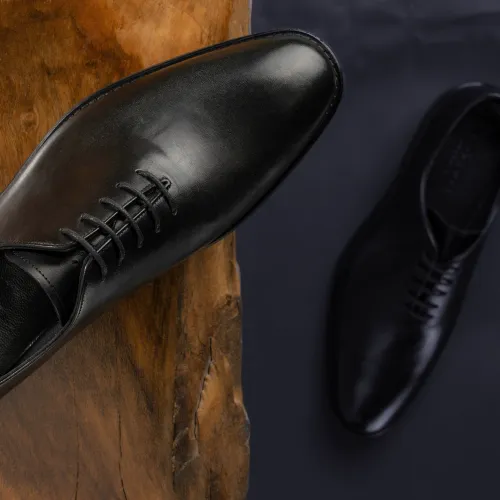
Oxford Shoes
The defining feature of an Oxford is closed lacing. The sections holding the eyelets are sewn beneath the front portion of the shoe, creating a clean and relatively streamlined appearance.
Oxfords are traditionally among the dressier choices in men’s footwear and are commonly worn with suits and more formal clothing.
Derby Shoes
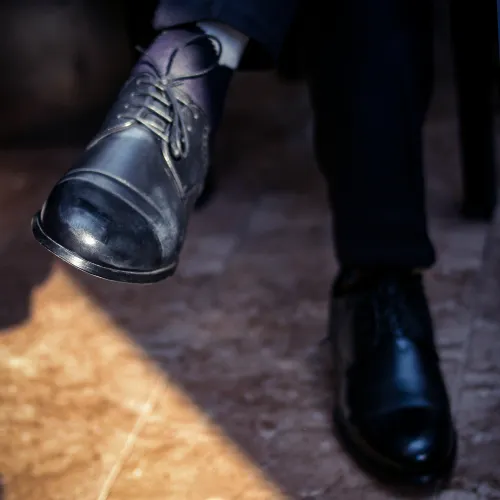
Derbies use open lacing. Their eyelet sections sit on top of the shoe rather than being hidden like the Oxford.
That small structural difference gives Derbies a slightly more relaxed appearance and can also provide extra adjustment across the instep.
Oxford and Derby are commonly confused, but the lacing system is the main tell.
Monk Strap Shoes
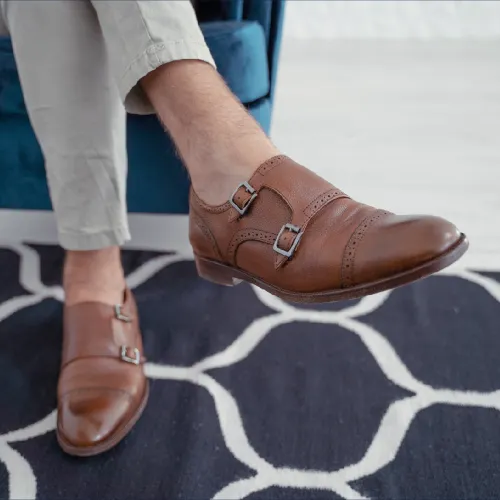
Monk straps replace laces with one or more buckled straps.
Single monk straps use one buckle, while double monks use two. They sit in that odd space between traditional dress shoes and more distinctive personal style.
They can work with tailoring or smarter casual clothing depending on the design.
What About Brogues and Wingtips?
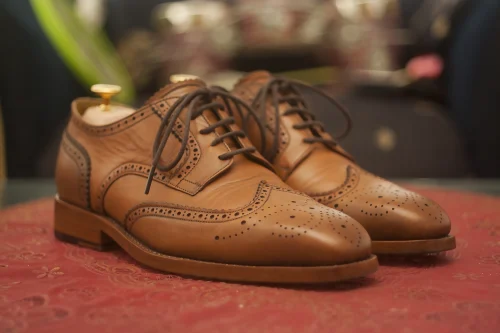
Broguing refers to the decorative perforations punched into the leather. Heavier broguing is traditionally considered less formal.
An Oxford can have broguing. So can a Derby.
A wingtip describes a toe design where the decorative cap extends backward in a wing-like shape. Many wingtips also feature broguing, which is why the terms are mixed together sometimes
Useful distinction:
Oxford and Derby describe construction around the laces.
Brogue and wingtip describe decorative details.
You may have heard “Oxfords not brogues” before, this article will give you some history with clarity.
Loafers
Loafers are slip-on shoes, meaning there are no laces to tie or buckles to fasten.
They range from relaxed casual shoes to polished styles that can work with tailoring.
Penny Loafers
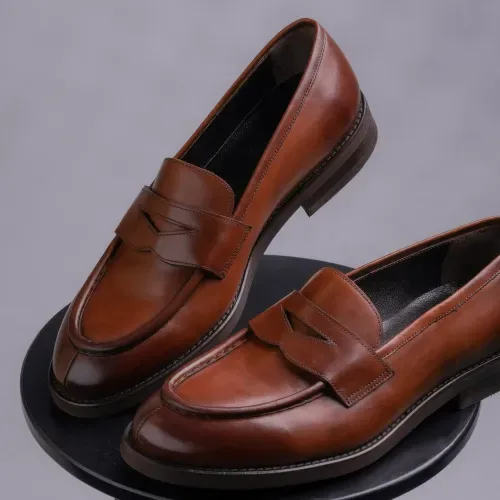
Penny loafers are identified by the strap running across the vamp, traditionally featuring a small cutout. Like you can put a penny in.
They are one of the most recognizable types of men’s shoes because they can move comfortably between casual and smarter outfits.
Tassel Loafers
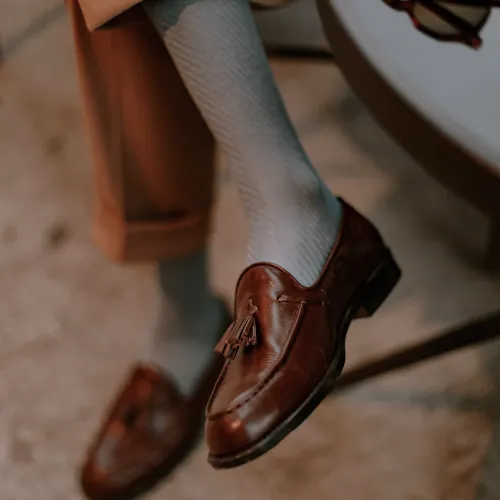
Tassel loafers feature decorative tassels across the front.
They usually lean slightly dressier than the classic penny loafer, though material, sole, shape, and color can shift the overall formality.
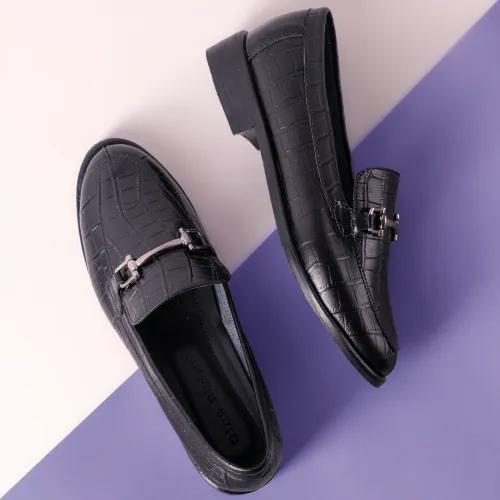
Horsebit Loafers
Horsebit loafers use a metal detail across the vamp rather than a leather strap or tassels.
The hardware gives them a sharper, slightly dressier appearance and makes the style easy to identify.
You may also see loafers described as moccasins. The terms are related, but they are not interchangeable. Moccasin can refer to a method of constructing the shoe, while loafer is a slip-on footwear style.
Boots
Boots cover the ankle and range from sleek dress styles to footwear built for mud, work, cold, bad weather, and occasional stomping of “mud holes” in asses.
That makes “Boots” one of the broadest categories in men’s footwear.
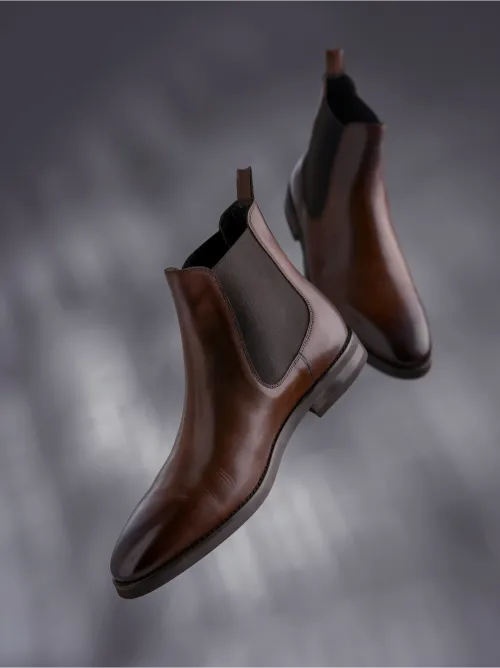
Chelsea Boots
Chelsea boots are defined primarily by their elastic side panels.
They usually have a clean upper with very little hardware, which allows sleek versions to work with smart clothing while chunkier designs come off more casual.
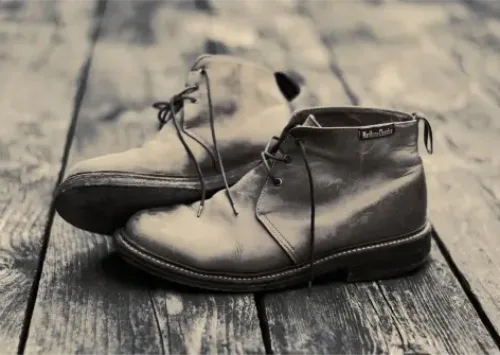
Chukka Boots
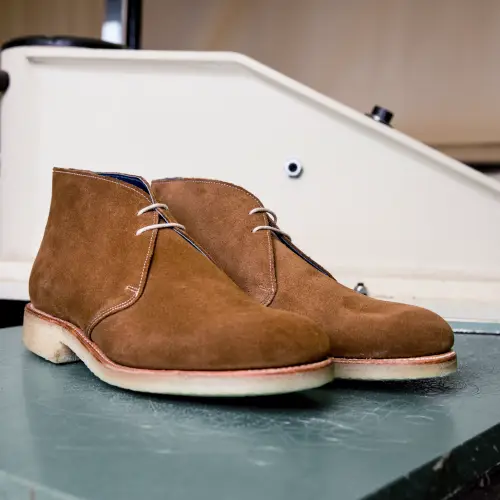
Chukkas are ankle-height boots traditionally built with a simple upper and a small number of eyelets.
They can appear in leather, suede, and other materials and can range from fairly polished to very relaxed.
Dress Boots
Dress boots take many of the cleaner proportions associated with dress shoes and extend them above the ankle.
Sleeker leather, thinner soles, restrained detailing, and refined shapes generally push them toward the dressier end of the boot spectrum.
Desert Boots
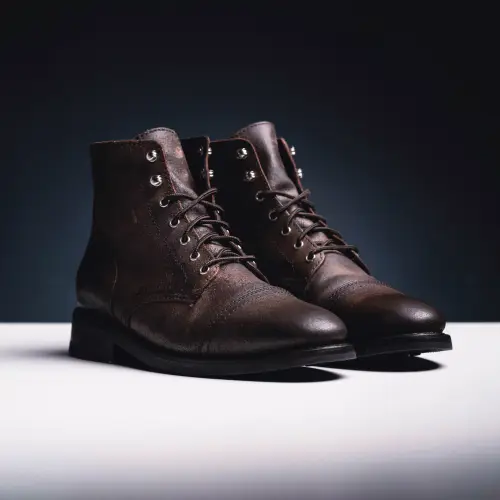
Desert boots belong to the broader Chukka family.
They are typically casual, often made from suede, and traditionally associated with soft crepe-style soles and treasure hunters.
That means every desert boot can reasonably be considered a type of Chukka, while every Chukka is not automatically a desert boot. Not all dogs are dachshunds, but all dachshunds are dogs.
Rugged and Utility Boots
Heavier boots tend to use thicker soles, tougher materials, and more substantial construction.
Some are designed primarily for casual styling. Others have genuine outdoor or work purposes.
Appearance alone should not be treated as proof of performance.

Sneakers
Sneakers now cover everything from gym shoes to minimalist leather footwear worn with smart-casual outfits.
Their purpose matters as much as their appearance.
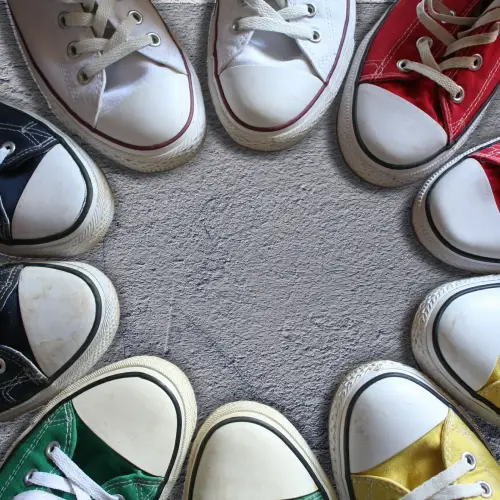
Lifestyle Sneakers
Lifestyle sneakers are designed primarily for everyday wear rather than athletic performance.
Canvas sneakers, retro sneakers, and clean leather sneakers all fit comfortably within this category.
They are usually easiest to wear with casual clothing such as jeans, chinos, shorts, and relaxed trousers.
Smart-Casual Sneakers
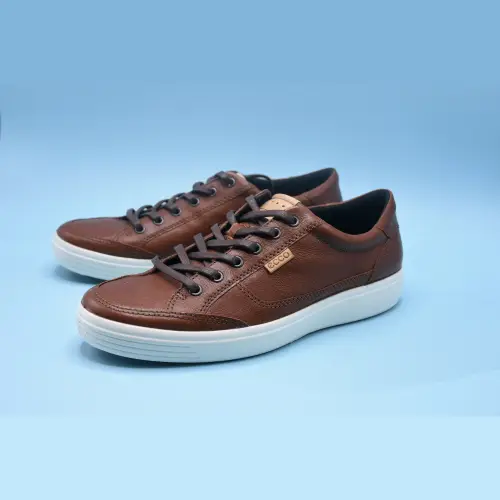
Some sneakers use simple shapes, restrained colors, and minimal branding to work with cleaner casual outfits.
They remain sneakers, though. A sleek white leather sneaker does not suddenly become a dress shoe because someone wore it with trousers.
Context still matters.
Building the rest of the outfit? Our Smart Casual Guide breaks down the clothing, colors, and combinations that make the dress code work.
Performance Sneakers
Running shoes, training shoes, court shoes, and similar footwear are designed around physical activity.
Their shape, cushioning, support, traction, and materials may be chosen for performance rather than snazzy outfit versatility.
That places them closer to athletic footwear, even though they technically remain part of the larger sneaker family.

Casual Shoes
Not every casual shoe is a sneaker or loafer.
A few other types of men’s footwear occupy their own useful corners.
Boat Shoes
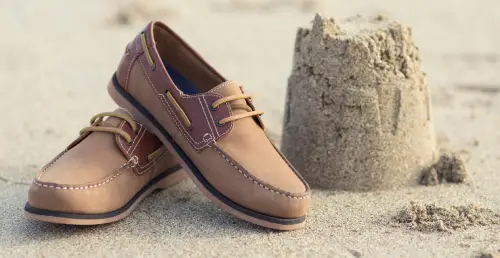
Boat shoes traditionally feature low-profile uppers, moccasin-style stitching, and soles originally designed to provide grip on wet decks.
Today they are primarily associated with relaxed warm-weather clothing and guys who only button the 3rd button from the bottom on a dress shirt in summer.
Espadrilles
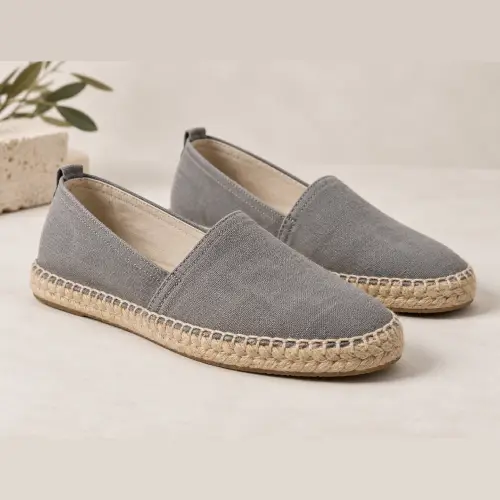
Espadrilles are lightweight casual shoes traditionally recognizable by their rope or jute-style soles, often paired with canvas uppers.
They work best in relaxed warm-weather settings and sit firmly on the casual side of men’s footwear. And it’s also fun to say “Espadrilles.”
Moccasin-Style Shoes
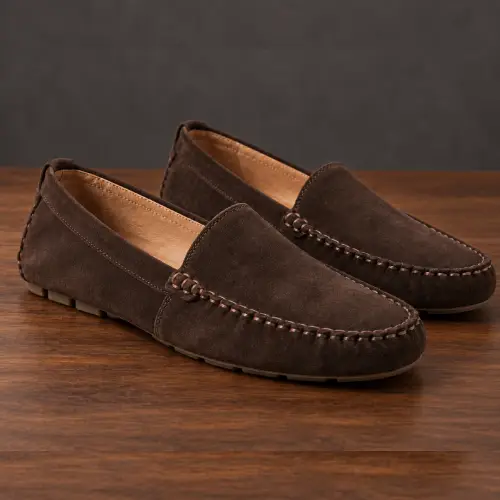
Moccasin construction has influenced many forms of casual footwear.
Some resemble loafers while others look closer to relaxed driving or house shoes. This is another reason shoe terminology can become messy: construction and style names often overlap.
Athletic Footwear
Athletic footwear is built around an activity, not an outfit.
Running shoes are engineered around forward movement, repeated impact, and evading the authorities. Training shoes generally need greater stability for varied movements. Court shoes may prioritize lateral support and traction.
Hiking and outdoor athletic footwear introduce a whole set of demands, including grip, terrain, weather, and durability. Meeting those demands can mean prioritizing certain characteristics over others.
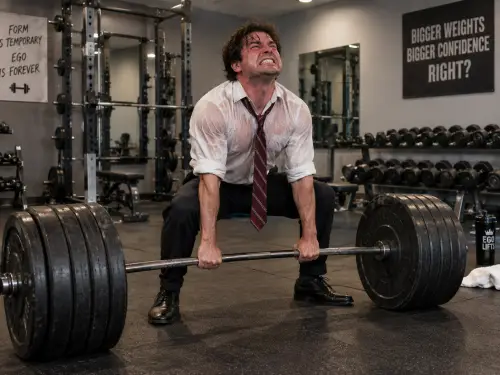
To put it almost too minimalistically: Pick the tool for the job.
Your squat rack does not care how nicely the shoes coordinate with your chinos.
But I’d like to know why you’re power squatting in chinos?
Work Footwear
Work footwear exists because some environments place demands on shoes that normal casual footwear is not designed to handle.
Work boots may use heavier uppers, thicker soles, reinforced construction, or protective features.
Safety footwear can also include slip-resistant soles, protective toes, electrical protection, or other job-specific features.
Do not assume a chunky boot qualifies as proper safety footwear because it looks capable of surviving military action. Workplace requirements and actual safety ratings get the final say.
Seasonal and Weather-Specific Footwear
Weather can change which types of men’s shoes make sense, even when the outfit stays basically the same.
Warm weather tends to favor lighter options like loafers, canvas shoes, breathable sneakers, and espadrilles.
Rain gums up the works. Water resistance, sole traction, material, and how easily the shoe can recover after getting wet become important.
Cold weather may require greater coverage, insulation, grip, and resistance to snow or slush.
So don’t treat material as a quality ladder. Suede, smooth leather, canvas, mesh, and synthetic materials all have their situations to shine.
How to Choose the Right Type of Men’s Shoe
Knowing the different types of men’s shoes is useful. Choosing among them gets easier when you ask four practical questions.
Does It Fit Your Foot?
A beautiful shoe that hurts your feet is a bad shoe for you.
Length matters, but so do width, toe shape, heel fit, volume, and the way the shoe holds your foot while walking.
Brand name and price cannot rescue poor fit.
Does It Fit Your Clothes?
Think about the overall formality and character of what you are wearing.
Oxfords naturally make sense with tailoring. Sneakers naturally make sense with casual clothing. Loafers, Chelsea boots, Derbies, and other styles can move between those ends depending on their material and design.
Does It Fit the Occasion?
Traditional footwear rules can still be useful because they help explain why certain combinations look more natural in certain settings.
They’re guidelines, not commandments my guy.
Does It Fit the Job or Weather?
Finally, ask what the shoe actually needs to survive.
Rain, snow, long walks, standing all day, physical work, and exercise can turn a stylish choice into a terrible practical decision.
The right shoe needs to fit your foot, your clothes, the occasion, and the conditions.
Understanding the major types of men’s shoes makes that decision much easier. In the end, you do not need twelve pairs lined up like a footwear museum, even though you may want to. You need the categories that make sense for how you dress and how you live.