How to Wear All-Black Outfits for Men
An all-black outfit sounds almost impossible to screw up, right? Just pick a black shirt, black pants, black coat, black shoes, black hat, Cadillac. Congratulations, you’ve defeated color! And the boy’s a time bomb. (I refuse to explain that lyrical reference)
Then you put everything on and then somehow you look like you’re working security at a lightly filled comedy club.
All-black outfits for men work best when the clothes have enough variation to keep your eye moving. Texture, shape, fabric, and small shifts in black give the outfit definition without messing with the super simple color palette.
Here’s how to do it.
Why All-Black Outfits Work
Black already carries a lot of visual weight. Can be hard to dress down depending on the pieces. Using it across the entire outfit creates a clean line from top to bottom and makes unrelated pieces feel connected.
That simplicity is also where things can wander into the nope.
A black cotton shirt, black cotton pants, black belt, and black shoes with almost identical finishes can flatten into one big dark shape. Yes, the outfit matches technically, but it may still feel unfinished.
The fix comes from variation inside the black palette.
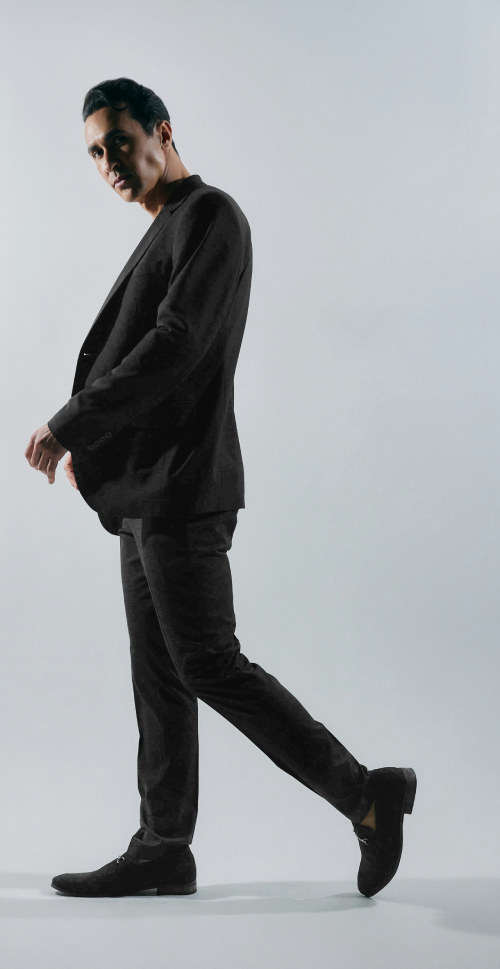
How to Make an All-Black Outfit Look Intentional
Mix Different Textures
Texture does so much when color isn’t changing.
Try combining smooth cotton with work denim, wool with leather, or even knitwear with pleated trousers.
You’re still wearing black from top to bottom, but each material handles light differently. That gives individual pieces some definition.
A black leather jacket over a black T-shirt and jeans is the easy example. Same basic color. Three different surfaces.
Here another take on the all black Hack as GQ would call it.
Use Slightly Different Black Values
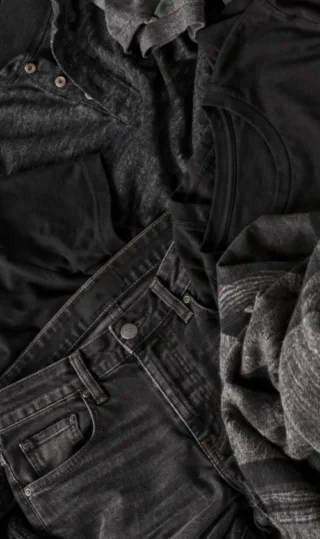
Even with the magic of Woolite, all your black shades will not, and thankfully, do not have to match perfectly.
Charcoal-black denim, washed black cotton, deep black leather, and soft black knitwear can sit comfortably together.
In fact, forcing every item to match exactly is silly and reserved only for the first day of school in a new town where you want to signal dominance to the goths. Needlessly difficult. Fabric, dye, age, washing, and lighting all affect how black appears.
The important part is making those differences feel considered and deliberate.
Use Fit and Silhouette
With fewer color changes to separate pieces, shape stands out more.
A fitted black tee with straight-leg trousers creates a different outline from an oversized tee with relaxed pants. A structured jacket gives definition to softer or smoother pieces underneath.
This is also where sloppy sizing starts getting noticed. Black may hide the small details, but it will not rescue shoulders hanging in the wrong place or trousers puddling around your shoes.
Can You Mix Different Shades of Black?
Yes.
Actually, unless every garment came from the same fabric roll yesterday morning, you probably already are.
Black fades differently depending on the material. Denim often shifts toward charcoal. Cotton can become softer and grayer. Leather may stay much deeper. Knitwear may reflect enough light to appear lighter even when the actual color is similar.
Variations usually look best when there is an obvious material change.
A faded black denim jacket over a deep black T-shirt makes sense. So does a washed black tee with cleaner, sharp black trousers.
Problems usually start when two similar garments look like they were supposed to match and missed.
QUICK NOTE: Shades / Values
Here, we are referring to “Shades” of black as larger steps between each other, and the smaller, subtle differences are individual “Values”
Think a black suit jacket with noticeably faded black suit trousers. That reads differently because the pieces are expected to function as a matching set.
“Want to take the same idea beyond black? My guide to monochrome outfits for men gets into using shade, texture, and proportion across the rest of the color wheel.”
Casual All-Black Outfits for Men
Casual clothing is probably the easiest place to use an all-black outfit.
Black T-Shirt and Black Jeans
Start here.
A plain black T-shirt with black jeans is the simple base that works with sneakers, boots, an overshirt, a bomber jacket, or a denim jacket.
Washed jeans are especially useful here because they create more separation from the shirt.

Polo or Knitwear With Black Trousers
A black knit polo with black trousers pushes the outfit slightly dressier but not business casual.
The knit texture keeps the top from being swallowed by the trousers, especially if the pants have a smoother surface.
Overshirt and Relaxed Trousers
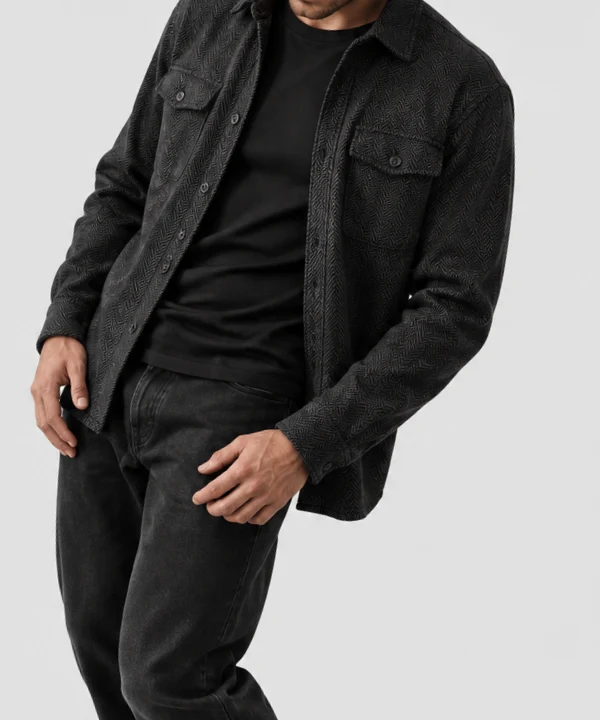
A black overshirt adds structure without getting fussy.
Wear one over a smooth tee with relaxed trousers or jeans. Leaving the overshirt open also gives the outfit another visible layer, which helps break up all that black. Watch the shine on some overshirts unless vampire is the vibe. A lightweight herringbone overshirt adds texture without making the whole thing feel heavy.
Black Denim and Workwear
Denim jackets, chore coats, heavier boots, canvas pieces, and washed black jeans can take the same color palette in a rugged direction.
This is where faded black often shines because a little wear suits the clothing.
All-Black Business Casual Outfits
All-black business casual outfits work better with more subtle office-appropriate clothing choices.
A black knit polo with tailored trousers is one of the easiest combinations. Add loafers, sleek boots, or simple leather shoes depending on the workplace.
A black button-up shirt can also work, though the outfit tends to read dressier. Pair it with trousers that have a clean drape, and avoid shirts with shiny fabric unless you make that judgement call and that’s the vibe you’re after.
A black blazer gives you another option. It can sit over a tee or knit polo in relaxed offices, or over a collared shirt where the dress code runs slightly sharper, or you want to run slightly sharper.
Workplace rules still matter. Some offices are perfectly happy with dark sneakers. Others expect traditional leather shoes.
Dressy and Formal All-Black Outfits
All-black gets trickier as the dress code becomes stricter because specific events may have their own clothing expectations.
For ordinary dressy occasions, a black suit with a black shirt creates a strong evening look. A black suit with a black Henley underneath feels slightly softer, less corporate.
You can also use black tailoring as part of a mixed outfit. A black blazer with black trousers that are clearly different in texture can work when you are intentionally wearing separates.
For events with a stated dress code, follow the damn dress code first. “All black” describes a color scheme. It does not replace traditional rules for black tie, weddings, funerals, traditional business clothing, or other sophisticated situations with specific expectations, like Buc-ee’s or IKEA.
All-Black Party Outfits
Party clothes give you way more room to play with shape and texture.
For a casual party, black jeans or trousers with a tee, polo, or open overshirt will usually cover it.
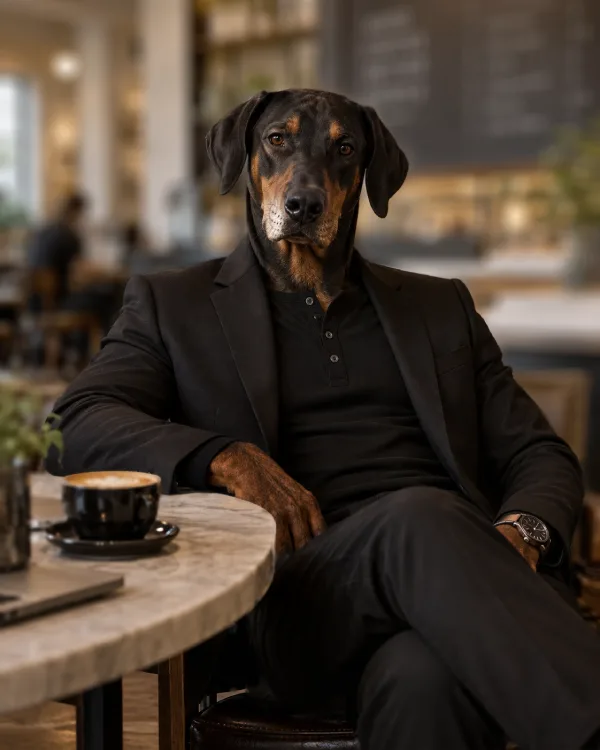
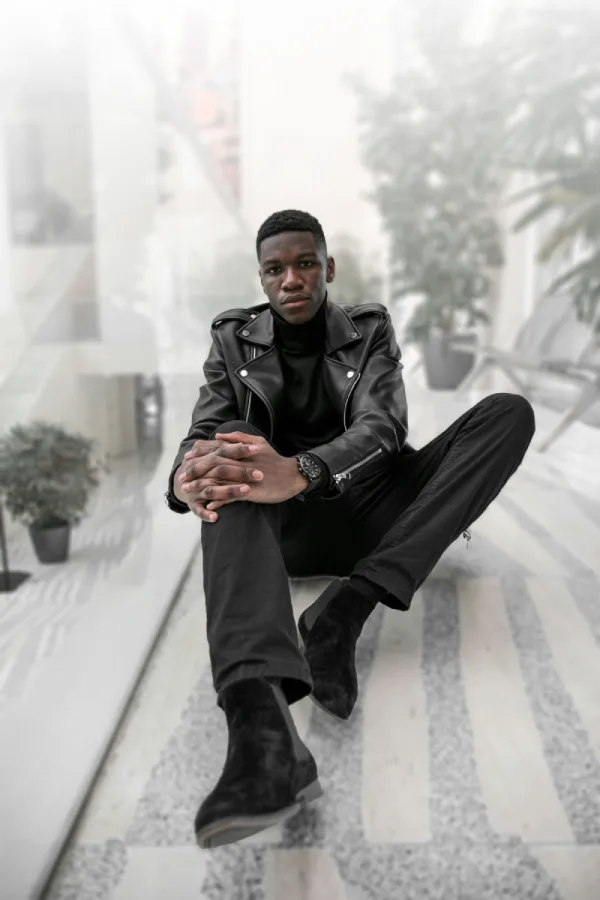
For nightlife, you can push the fabrics further, be daring, try a turtleneck. Leather, suede, textured knitwear, cleaner tailoring, jewelry, and sharper shoes all become easier to use.
The main danger is piling every black item into the same outfit.
Leather jacket. Black shirt. Black jeans. Giant boots. Silver chains. Sunglasses at 11 p.m.
At some point you have accidentally joined a coven.
Shoes to Wear With All-Black Outfits
“If you’re deciding between loafers, Chelsea boots, sneakers, or something dressier, my guide to the different types of men’s shoes breaks down where each one actually belongs.”
Black shoes are the simplest choice because they keep the line continuous.
Black sneakers work with casual outfits. Boots add weight and are particularly good with denim, workwear, and colder-weather clothing. Loafers and dress shoes fit cleaner trousers and tailoring.
The shoes do not have to be black. Sounds like cheating after all this, doesn’t it?
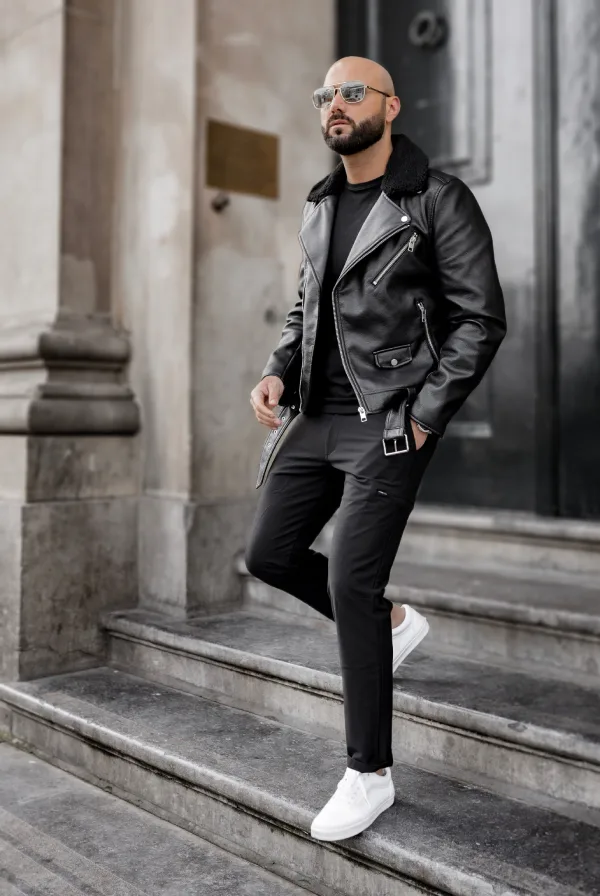
White sneakers create a clear visual break and can work with casual outfits. Dark brown boots can also work, especially when another warm element such as leather appears elsewhere.
Once the shoe color changes, though, it becomes a deliberate part of the outfit instead of disappearing into the palette. It can’t hide, so you have to own it.
Accessories With an All-Black Outfit
Accessories have plenty of room to show up against black clothing, so you rarely need many.
A leather belt or bag can add another surface. A watch gives the wrist some definition. Silver-toned metal works easily with black, while gold-toned pieces add warmth.
Sunglasses are practically cheating.
Keep the scale of the accessories connected to the clothing. Chunky boots and relaxed workwear can handle a bolder watch or belt. Cleaner tailoring usually looks better with slimmer accessories.
If you want to go deeper on watches, rings, chains, belts, bags, and the rest of the shiny nonsense, I have a whole guide to men’s accessories.”
All-Black Outfits by Season
Summer
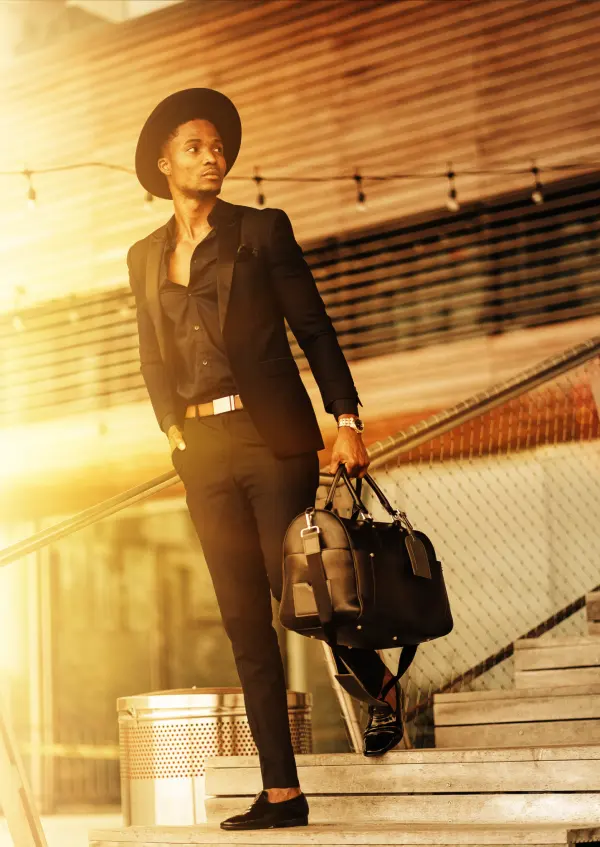
Black in summer works when the fabrics are the secret weapon.
Think lightweight cotton, linen, breathable knits, looser pleated trousers, polos, camp-collar shirts, shorts, and lighter shoes.
Reducing layers also helps. You do not need three different textures stacked up when it is 102 degrees, and the sidewalk is trying to cook you.
Fall and Winter

Cold weather makes all-black dressing easy because layering creates natural variation.
Black denim, wool trousers, knitwear, leather jackets, overcoats, boots, and heavier overshirts all bring their own surfaces and shapes.
This is where an all-black palette can get particularly interesting without needing much effort.
Common All-Black Outfit Mistakes
Every piece has the same texture.
A black tee with black jeans can work perfectly well. Add three more pieces in nearly identical flat cotton and things start getting murky.
Your faded blacks look accidental.
Fading works beautifully in denim and casual clothing. It gets awkward when pieces have drifted so far from each other when they are supposed to look matched.
The fit is off.
A simple color palette puts extra attention on shape. Sleeve length, trouser break, shoulder fit, and proportions matter so much more.
The outfit is dressier than the setting.
Black naturally pushes some clothes toward an evening or formal feel. A black shirt, black tailored trousers, and polished black shoes may feel excessive when everyone else is wearing T-shirts and sneakers.
All-Black Outfit Ideas You Can Copy
You do not need complicated formulas. Start with these:
Casual:
Black T-shirt + washed black jeans + black sneakers
Smart casual:
Black knit polo + black trousers + black loafers
Layered casual:
Black tee + black overshirt + relaxed black trousers + sneakers
Business casual:
Black knit polo + tailored black trousers + leather loafers
Evening / Date night:
Black shirt + tailored black trousers + Chelsea boots + simple metal watch
Warm weather:
Black polo + lightweight black trousers + loafers or minimalist sneakers
Cold weather:
Black knitwear + charcoal-black jeans + black leather jacket or wool coat + boots
Once you understand what is separating the pieces, an all-black outfit becomes pretty easy to build.
Color already handled itself.
You get to worry about the fun stuff now: fabric, fit, shape, and deciding how much black is enough before someone asks you to bounce someone out of the establishment.