

Self-Confidence Exercises for Men: Beat Doubt, Don’t Fake It
For a long time, I had zero self-esteem.
Not low. Zero.
Every time I did something decent, I felt like a fraud. Like I didn’t deserve the win, didn’t earn it somehow, or hadn’t suffered enough for it to count.
That feeling showed up sometimes. Then it showed up often. Then, for a while, it felt like it had its own damn parking spot in my head.
But I’ve learned to spot it. I’ve learned to work around it. And I’ve picked up a few self-confidence exercises for men that helped me build inner confidence, or at least take a step toward being more myself.
When I say self-confidence exercises, I don’t mean mirror chants or pretending you’re the CEO of the sidewalk. I mean small, repeatable things that change how you move, dress, think, and recover when doubt starts running its mouth.
Here’s what still helps me today.
But first:
I’m not a licensed therapist or medical professional, and this content isn’t medical advice. You’re responsible for how you choose to use the information shared here. Always talk to a qualified pro if you’re dealing with serious mental or physical health issues.
Start With Your Confidence Style
Confidence gets easier when the exercise fits the guy doing it.
You can’t build confidence if you don’t have some idea of what kind of guy you are. I’m not talking zodiac signs. I mean personality. We tend to fall somewhere between these pillars: Dominant, Inspiring, Cautious, and Supportive.
Dominant, Inspiring, Cautious, and Supportive.
Here’s the breakdown:

Dominant:
You like taking the lead and crushing goals.
Try HIIT, competitive sports, CrossFit, or something like Tough Mudder. You probably need a challenge with a finish line, a number, a clock, or someone trying to beat you.
Your confidence grows when you have a target to beat.
Inspiring
You’re social and energetic.
Group classes, hiking groups, low-key team sports, or anything with a little camaraderie can work well for you. You thrive on connection, movement, and shared energy.
Your confidence usually shows up faster around people.


Cautious
You like calm and structure.
Running, yoga, walking, stretching, or solo training can give you room to think and move without pressure. You probably do better when your routine feels manageable instead of loud.
Your confidence builds when the pressure drops and the routine makes sense.
Supportive
You’re all about community.
Partner workouts, small group hikes, spin classes, or accountability-based routines can help you show up without feeling like you have to become some lone-wolf action figure.
Your confidence comes from showing up with someone, not proving everything by yourself.

And yeah, confidence doesn’t only come from workouts. Learning practical skills can help too. If you want a low-stakes win outside the gym, learning the art of pan-cooking the best steak is a surprisingly tasty place to start.
Confidence Exercises That Match Your Personality
Matching your confidence work to your actual personality makes a big difference.
Pick the kind of hard that feels useful, not the kind that makes you quit 3 days in.
If You’re a Go-Getter:
You probably need effort you can measure.
Weightlifting: reps, sets, weight, progress.
CrossFit: timed circuits and clear benchmarks.
Tough Mudder: full-body challenge, competition, mud, bad decisions, good stories.
There’s something useful about having a number to chase. It turns confidence into proof.
If You Like Your Space:
Sometimes you need quiet.
I’ve been there. Running solo or doing yoga at home helped me reset. It was me, my thoughts, some breathing, and fewer people making strange gym noises nearby.
Running: trails, music off or on, depending on your brain that day.
Yoga: home mat, low pressure, no audience.
Tai Chi: calm, controlled, deceptively useful.
Confidence doesn’t always need noise. Sometimes it needs room.
If You’re Social:
You feed off other people’s energy.
Group workouts, boot camps, pickup games, hiking groups, or classes can give you that extra push. The camaraderie keeps it fun, and fun matters more than people admit.
Boot camps: structured, sweaty, usually 10 to 20 people.
Team sports: grab your crew and move around with a purpose.
Some guys build confidence faster when they feel part of something.
If You’re a Supporter:
You’re fueled by connection and purpose.
Spin classes can give you that “we’re all dying together” feeling without needing to talk too much.
Chill circuits can keep you accountable without turning every workout into a motivational hostage situation.
Partner walks, small groups, and shared goals can be a good fit here.
Indoor vs Outdoor: Where You Move Matters
The vibe of your workout space messes with your head more than you’d realize.
Indoors
Indoors can be great for routine. You control the playlist, the temperature, the timing, and the general vibe.
That helps if you need structure.
The downside: some people feel boxed in. Gyms can also add pressure if you’re already feeling weird about your body, your strength, or where you are starting from.
Outdoors
Sunshine. Trees. Air. A sidewalk with fewer mirrors. (NCBI says that too). Also a higher chance for a meet cute or heat stroke.
Working out outdoors can boost mood, help with stress, and make movement feel less like punishment. You may also feel less judged outside than in a gym where everyone appears to know what they’re doing, even when half of them are probably guessing too.
No right or wrong answer.
Pick what fits your brain that day.
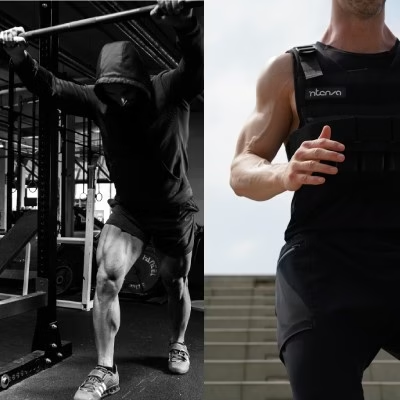
Quick tip: workout bands, the giant rubber band kind, are no joke. They can give you a legit pump, and they work indoors or outdoors. Very rude for something that folds into a drawer. Warning Potential ouches.
Use Clothes as a Confidence Exercise

I know this post is about mindset, but confidence wears clothes.
Literally.
When I felt like a ghost, I dressed like one. Oversized tees, random sweats, nothing with intention. Once I started putting even a little thought into it, like a clean shirt, maybe a ring or a chain, I stood straighter.
I got noticed.
Then I started noticing myself.
Confidence isn’t about being flashy. It’s about showing the hell up like you give a damn.
Need a start? Here’s a guide on building your look.
There’s a name for this: enclothed cognition.
Fancy term, simple idea. What you wear can change how you act because you attach meaning to it. A fitted jacket doesn’t magically fix your life, but it can make you stand a little different. Sometimes that’s enough to get moving.
So yeah, put on that jacket. Lace those boots. Wear the mindset you want to walk in.
Athletes do it. CEOs do it. Batman does it.
The right fit can help create the right frame of mind.
Want to take it further? Check out the basics of crafting your look.
Beating Imposter Syndrome When Doubt Gets Loud
Imposter syndrome is that rotten little voice that says your win was a fluke, your progress doesn’t count, and everyone is about to find out you’re winging it.
I once landed a graphic design gig at a multi-million-dollar firm in a major city after three interviews.
One phone call. Two sit-downs. Then bam: hired.
Suddenly, I had more money, more pressure, and way more responsibility.
Then that voice crept in:
Am I missing something obvious?
Do I know enough?
Do they know I don’t know what I don’t know?
That’s imposter syndrome.
It kicks in when success feels too easy or when you get something you don’t think you’ve earned. Like you haven’t suffered enough to deserve the win.
A lot of people feel it at some point.
You’re not broken. You’re not alone.
It’s bad brain static. Don’t let it steer.
When it hits, I remind myself:
If they hired me by accident, then some even dumber bastard signed off on it. Maybe I should have his job.
Stay sharp.
You’re not the impostor. You’re the upgrade.
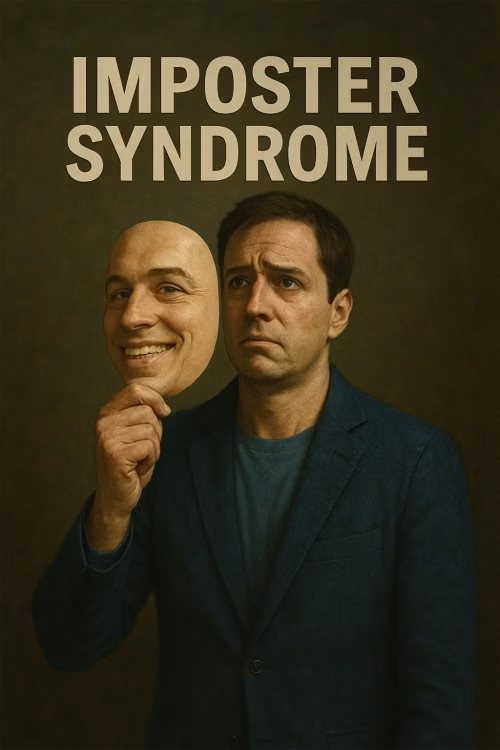
What helped me:
Notice it. Catch the fraud voice before it starts driving.
Talk it out. Vent to a friend, but don’t build a shrine to the thought.
Flip the script. “I suck” becomes “I’m learning.” Corny? A little. Useful? Yeah.
Keep receipts. Write down wins, even tiny ones. Especially tiny ones.
Get outside input. Mentor, coach, therapist, trusted friend. Someone who can see the room when your brain is fogged up.
Set goals you can actually hit. Not “new personality by Monday.” One real move. Then another.
Feeling a bit of the imposter? If this caught your attention, you may like the full read on masculine archetypes. It’s raw, clear, and cuts through the noise.
Goal Type | Example |
Short-term | Finish a workout challenge |
Medium-term | Wrap up that project early |
Long-term | Go for that promotion |
For a deeper look at handling imposter syndrome, therapy beats a blog post. But McLean Hospital has strong information if you want a serious source to read.
Movement Equals Mental Clarity
When I move regularly, everything works better.
Less anxiety. More focus. Better mood.
And yeah, a better body doesn’t hurt. Well, technically it does. But it’s the good kind of hurt.
The mental clarity matters most.
Working out can boost your mood because endorphins kick in. It can sharpen focus by getting your blood moving, which helps feed your brain. It can also help dial down stress by lowering cortisol and adrenaline.
Start small.
Ten-minute walks. Push-ups before bed. Stretching while your coffee brews. Something.
Consistency builds belief.
Not because one walk changes your life, but because one walk proves you can still make a move.
Enjoy It or Ditch It
Don’t force workouts you hate.
That’s how routines die.
Try new stuff. Switch it up. Dance, box, lift, run, walk, stretch, hike, swing a kettlebell around responsibly, whatever.
Out of all the self-confidence exercises for men I can suggest, this may be my favorite: allow yourself time to learn.
A lot of guys treat dabbling like wasted time.
It isn’t.
Dabbling is how you find the thing you’ll actually keep doing. Confidence doesn’t care if the activity looks cool. It cares if you return to it.
Move yourself. Enjoy it enough to come back.
And if you need a break from all the sweating, learn to cook a killer pan steak.
That counts too. Don’t argue with me. Protein has entered the chat.
Simple Self-Confidence Exercises for Men to Try This Week
Try one of these, not all of them.
This isn’t a montage.
Put on one outfit that makes you stand better.
- Take a 20-minute walk without doom-scrolling.
- Write down three wins from the last month.
- Text someone instead of disappearing.
- Pick one small goal you can finish today.
- Move your body in a way that matches your personality, not someone else’s gym fantasy.
- Clean up one small part of your space.
- Wear one accessory that makes you feel a little more intentional.
- Say yes to one useful thing you’ve been avoiding.
- Say no to one thing that keeps draining you.
That’s the work.
Small proof. Repeated often.
Lather, Rise, Repeat.
Final Word: Style, Mindset, Movement
Your brain and body are more connected than we’re told.
When I started dressing like I cared, I felt more confident.
When I moved my body, my brain stopped attacking itself as much.
When I gave myself some kindness, spoke up more, and slowly started believing I had earned a place in the room, the imposter syndrome didn’t vanish.
It lost power.
Your clothes, your workouts, your wins, they don’t have to be flashy.
They have to be yours.
Use these self-confidence exercises for men to build the look, build the habit, and build enough proof that doubt has less room to run its mouth.
Move your body.
Dress with intention.
Start small.
You’re not faking anything.
You’re showing up.
Trying to take life in stride while breaking down can feel like stagnation, but from my own experience, sometimes you need to fall apart before you fall into place.
Here’s a fun read when you’re ready to wear the armor.
And when you’re ready to build the armor around it, read my broader self-improvement guide next.