
How to Fold a Pocket Square: 5 Easy Folds for Any Occasion
How to fold a pocket square? Looks simple enough! Until you’re standing in front of a mirror, trying to make a piece of fabric behave. One corner sticks out too far. Another disappears. You just want it to stop looking like a used handkerchief crawling out of your jacket. And with so many folding options, it can feel like learning to tie a tie all over again.
Fortunately, you only need a handful of folds to cover most outfits. These five start with the tidy Presidential fold and work up to a three-point crown. Each has a different shape, a fabric it works with, and a situation where it makes the most sense.
Warning: Like ties, once you get the hang of different folds, shapes, and fabrics, you can easily fall into the trap of collecting them. And that’s before we even get into the fucking custom ones you can have made. RIP your wallet.
| Fold | Difficulty | Fabric | Look |
|---|---|---|---|
| Presidential (Flat) | Easy | Linen, cotton | Straight, clean strip |
| One-Point | Easy | Linen, cotton, woven silk | One triangular peak |
| Two-Point | Moderate | Linen, cotton, woven silk | Two offset peaks |
| Puff | Easy | Soft silk | Rounded, loose dome |
| Three-Point (Crown) | Moderate | Linen, cotton, light wool | Three staggered peaks |
Quick pick: A white linen flat fold is the low-effort choice for a tuxedo. A silk puff suits a relaxed blazer. For a wedding where you feel like having a little fun, try two or three points.
How to Fold a Pocket Square: 5 Step-by-Step Methods
Start with a clean pocket square and a flat surface to make things easier. The folds can vary slightly between guides; the methods below use one repeatable sequence for each shape. Keep in mind the visual balance of the lapels and the tie. A pocket square is supposed to present you, not peacock.
There are several accepted ways to create the same fold. Charles Tyrwhitt’s pocket square guide demonstrates alternative techniques for several classic styles.
1. The Presidential Fold (Flat Fold)
Difficulty: Easy
Best fabric: Linen or cotton
Best occasion: Business, formal events, tuxedos
The Presidential fold gives you a straight horizontal line above the pocket. It works especially well with white linen, where a little visible texture keeps the result from looking too rigid.

Step 1: Lay the square flat like a regular square, with its edges parallel to the table.
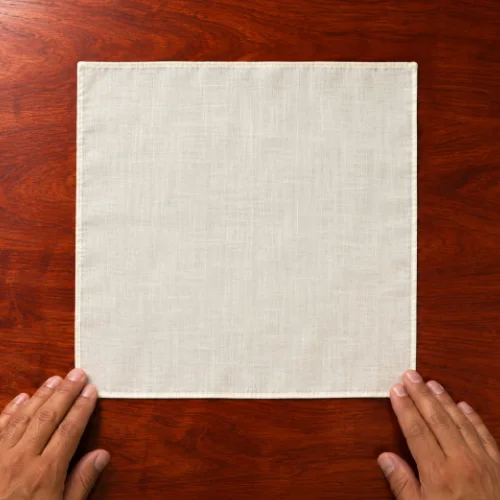
Step 2: Fold the left half over the right half to make a vertical rectangle.
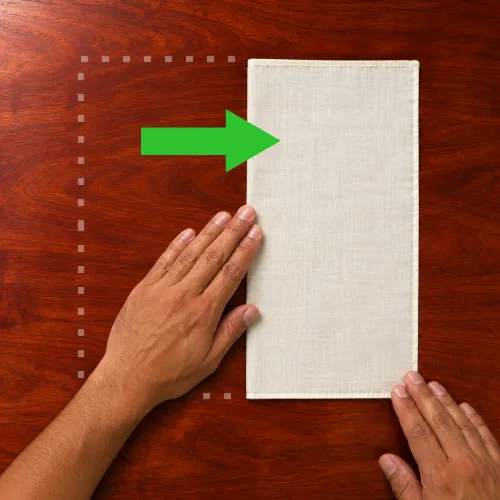
Step 3: Fold the bottom edge upward, stopping a little short of the top edge. This leaves a narrow band of the front layer visible at the top when needed.
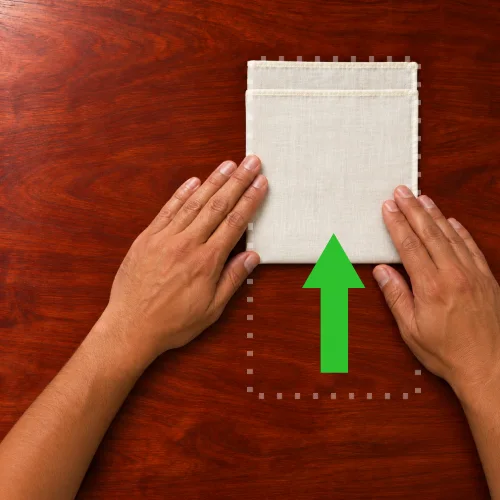
Step 4: Adjust the width by folding a side inward if the rectangle is wider than your jacket pocket.
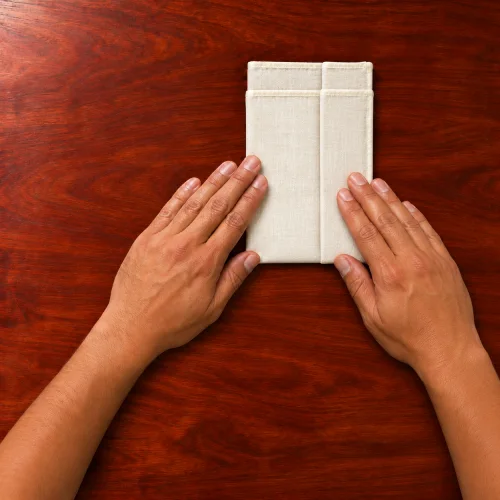
Step 5: Slide the folded bottom side down into the breast pocket, with the neat straight edge at the top. Adjust until a narrow strip shows.

What it should look like: A clean, straight horizontal edge, usually showing about a quarter to half an inch above the pocket. You can show a little more if the outfit calls for it.
It’s easy, though admittedly a little boring and stiff. Then again, if everyone’s speaking in corporate jargon, waxing poetic about TPS reports and synergy meetings, this fold will fit right in.
Watch for: A bulging pocket. If the square is thick, use fewer layers or a thinner fabric.
The handkerchief had other jobs
Eighteenth-century handkerchiefs were worn by men and women, often tied around the neck or worn beneath caps, as well as used for sneezes and tears. A surviving handkerchief in the Metropolitan Museum of Art collection doubles as a young woman’s embroidery sampler.
2. The One-Point Fold
Difficulty: Easy
Best fabric: Linen, cotton, or woven silk
Best occasion: Everyday suits, sport coats, dinners
One sharp triangle adds a little interest, creating an upward line that leads toward your face.
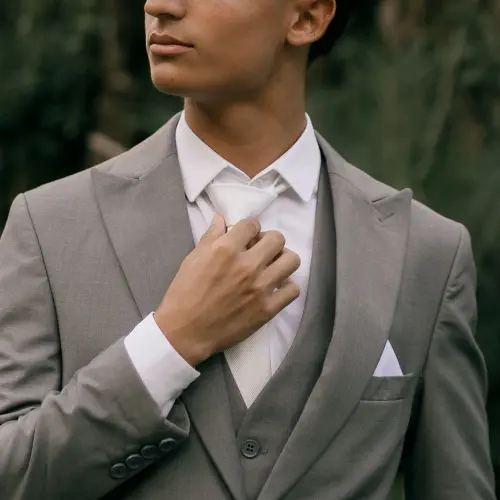
Step 1: Lay the pocket square as a diamond, with a corner pointing toward you.
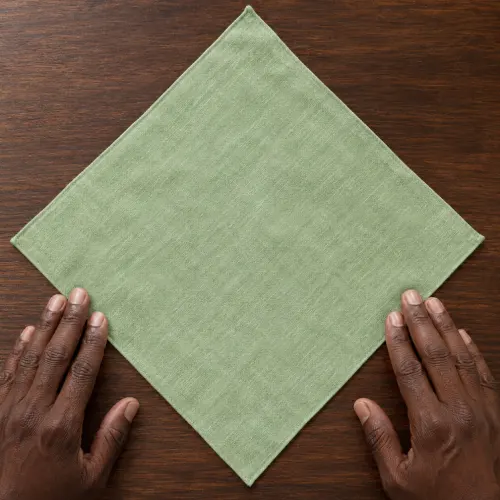
Step 2: Bring the bottom corner straight up to meet the top corner, creating a triangle with one peak.
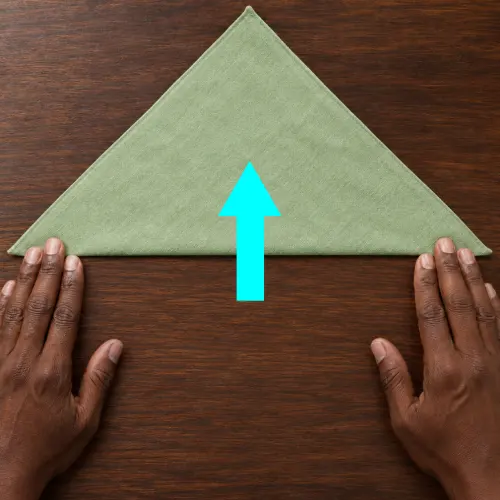
Step 3: Fold the left corner inward toward the right, across the center of the triangle.
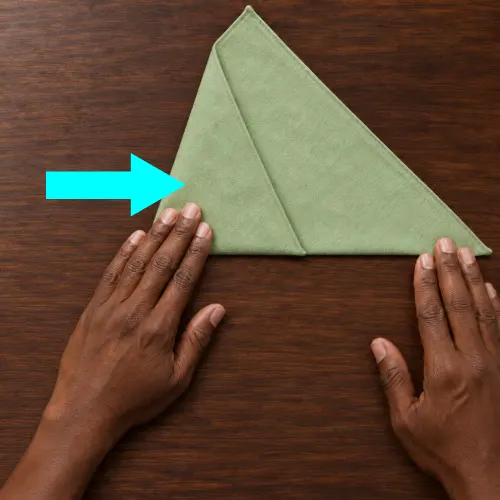
Step 4: Fold the right corner inward over that layer until the base is narrow enough for your pocket.
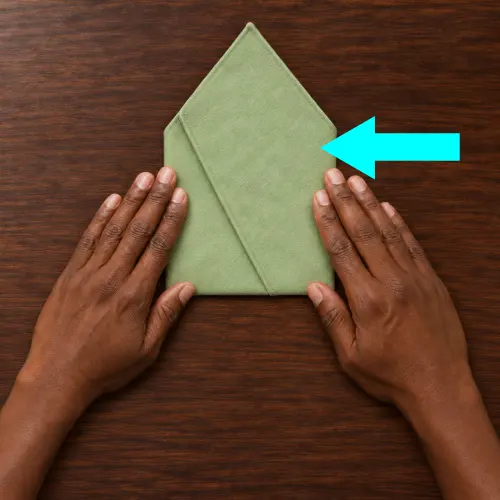
Step 5 : Tuck the base into the jacket. Leave the triangular point visible.
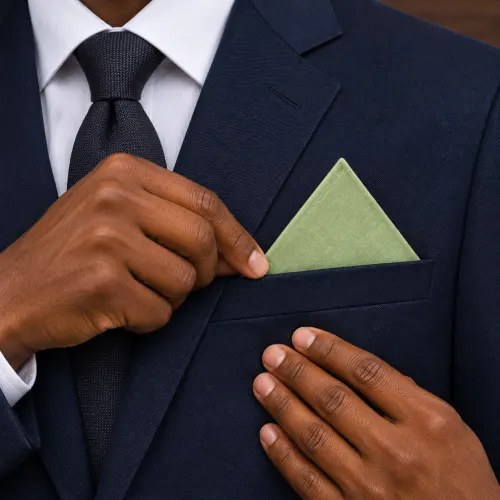
What it should look like: A single distinct point rising above the pocket, with the folded sides hidden.
Watch for: The skyscraper effect. Keep the point relatively low and broad rather than letting a long, skinny triangle tower over the lapel. It’s a pocket square, not a pocket Klan member.
3. The Two-Point Fold
Difficulty: Moderate
Best fabric: Linen, cotton, or woven silk
Best occasion: Wedding guests, parties, dressier social outfits
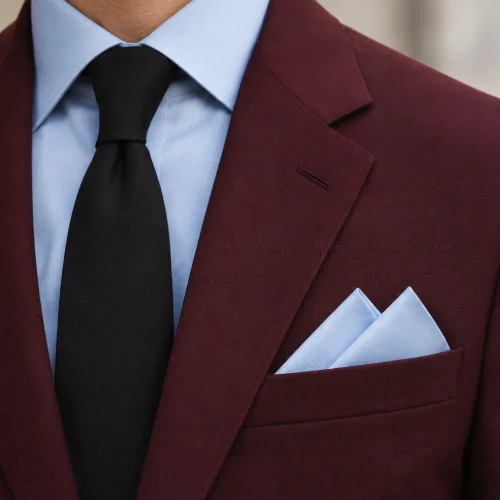
The two-point fold starts almost like the one-point. The difference happens immediately: the corners at the top are deliberately offset.
Step 1: Place the pocket square on a flat surface as a diamond.
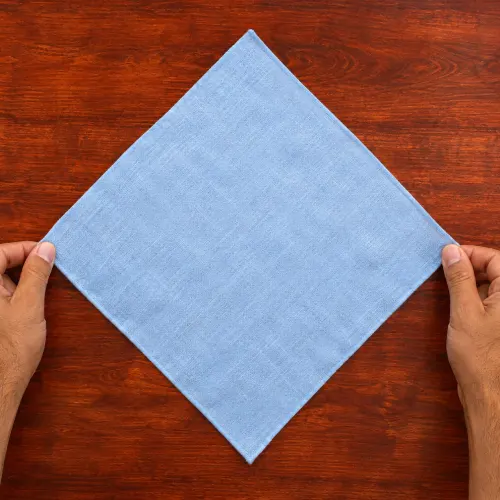
Step 2: Bring the bottom corner toward the top, but land it slightly to the left of the top corner. You should see two separate peaks.
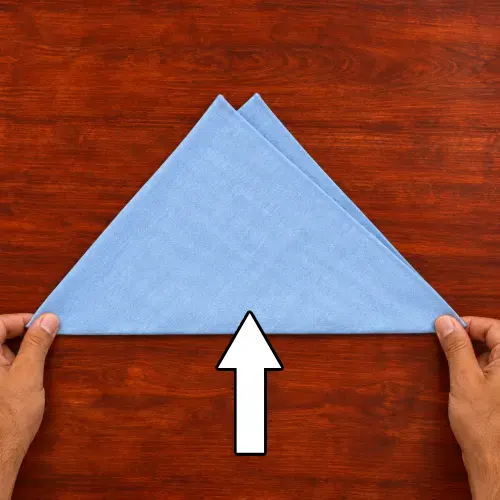
Step 3: Fold the left side inward across the body of the fold.
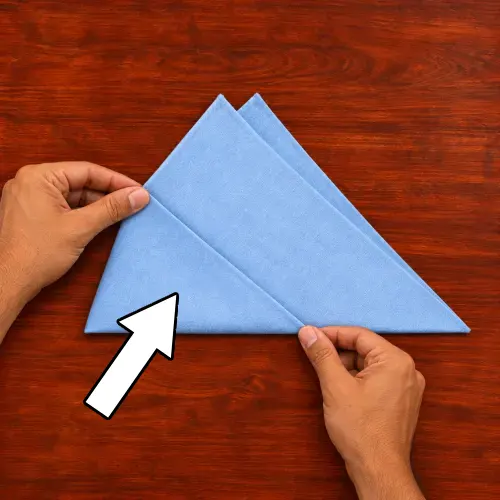
Step 4: Bring the right side inward over the left until the base fits your breast pocket.
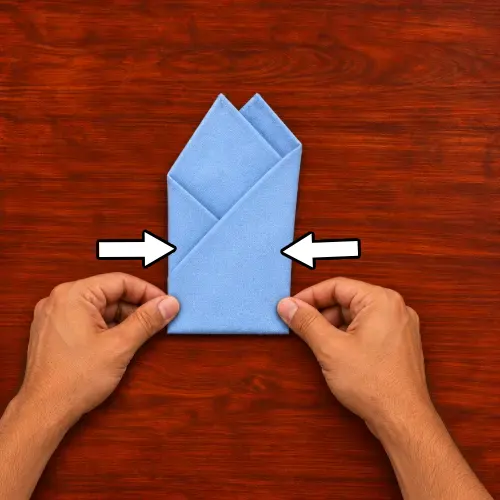
Step 5: Put the base in the pocket and gently separate the peaks if they collapsed together.
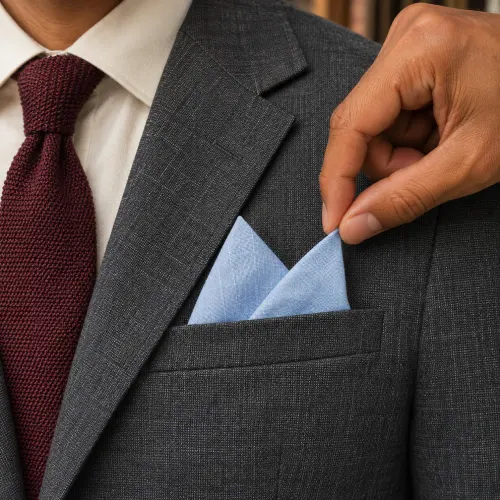
What it should look like: Two clearly separated triangular tips, similar in height, leaning in slightly different directions.
Watch for: A tiny offset that looks accidental. Give each point enough space to read as its own shape. You can make the difference modest without hiding it.
Fashion on a little square
A French linen handkerchief dated to the late eighteenth century, now at the Met, carries intricate embroidered mythological imagery. Decorative cloths had a long life before anyone started worrying about how many pointed corners should emerge from a jacket pocke
4. The Puff Fold
Difficulty: Easy
Best fabric: Soft silk or another supple fabric
Best occasion: Smart-casual blazers, dinners, celebrations
The puff is the one to try when a neat triangle feels a bit too fussy. Silk is especially good at falling into soft, rounded shapes.

Step 1: Lay the pocket square flat and pinch the fabric at its center with one hand.
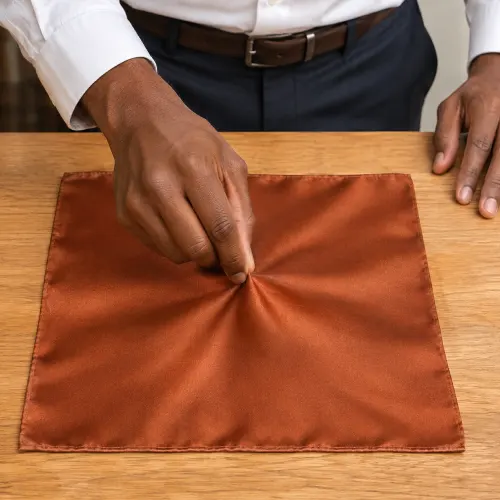
Step 2: Lift it by that center point so the corners hang downward.
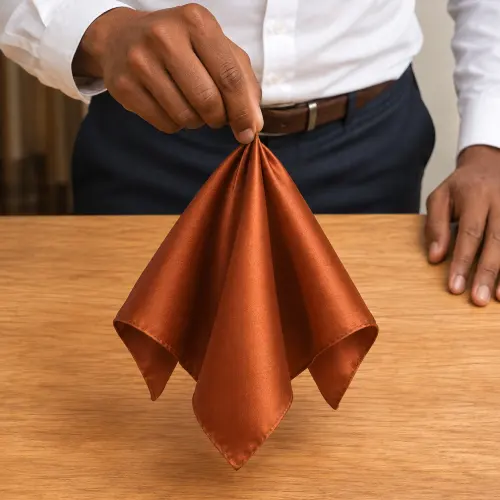
Step 3: With your other hand, loosely gather the hanging fabric beneath your pinched fingers.
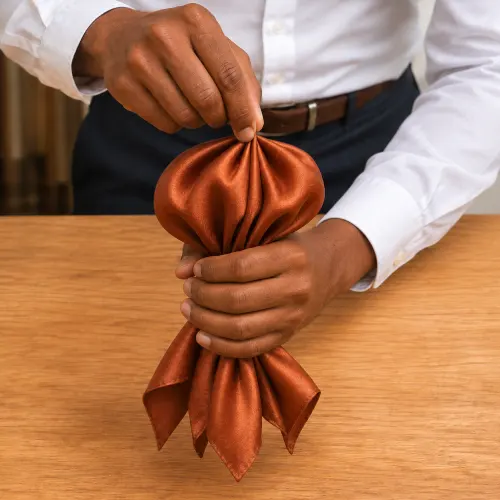
Step 4: Fold the dangling ends upward behind the gathered fabric to shorten it to pocket depth.
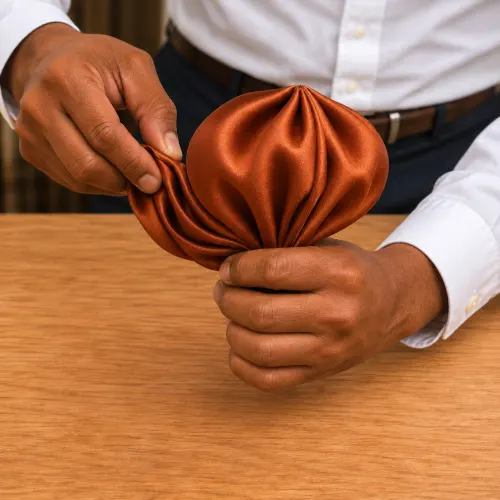
Step 5: Place the folded ends down inside the breast pocket, keeping the gathered center at the top. Gently open and shape the rounded puff.
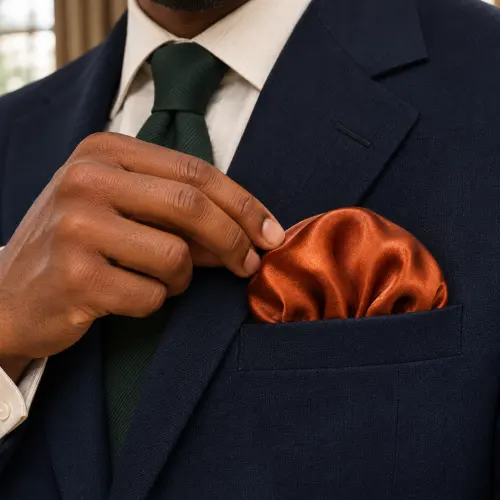
What it should look like: A soft dome above the pocket, with a few natural ripples. The points remain hidden inside.
Watch for: Overworking it. If you pack in too much fabric or keep pinching every wrinkle into position, the puff starts to resemble a stuffed pastry. Also, underworking it. This “fold” can have a side effect of looking rushed if not balanced.
5. The Three-Point Fold (Crown Fold)
Difficulty: Moderate
Best fabric: Linen, cotton, or light wool
Best occasion: Weddings, celebrations, expressive tailored outfits
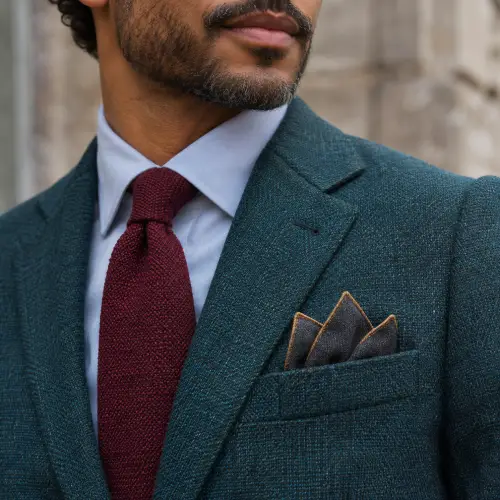
Three points give the pocket a little architectural drama. You can make the crown fairly restrained with plain white linen or more playful with a patterned square.
Step 1: Lay the pocket square as a diamond, one corner pointing down.
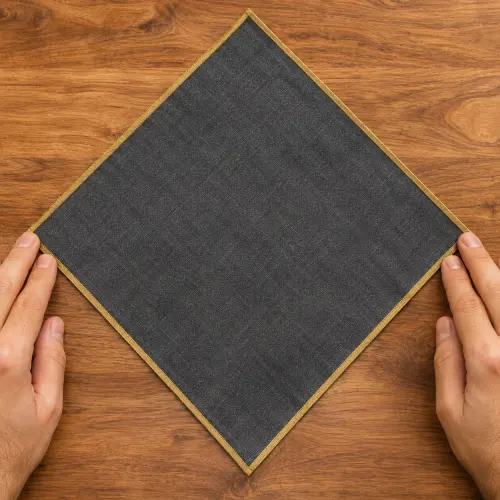
Step 2: Bring the bottom corner up so its tip lands slightly left of the top tip. You now have the same two peaks used in the previous fold.
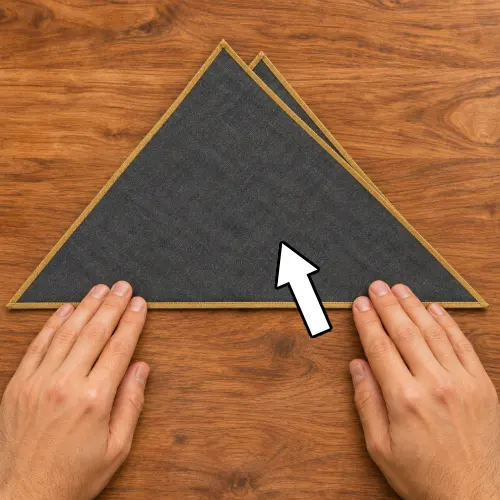
Step 3: Bring the bottom-left corner diagonally upward, positioning its tip right of the other two peaks. You should see three distinct points across the top.
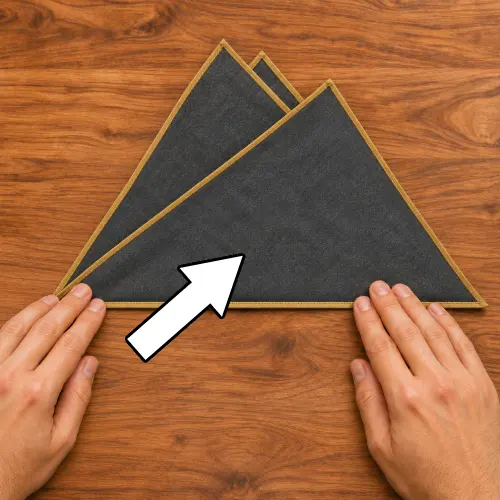
Step 4: Fold the remaining right-side corner inward to narrow the base to your pocket width.
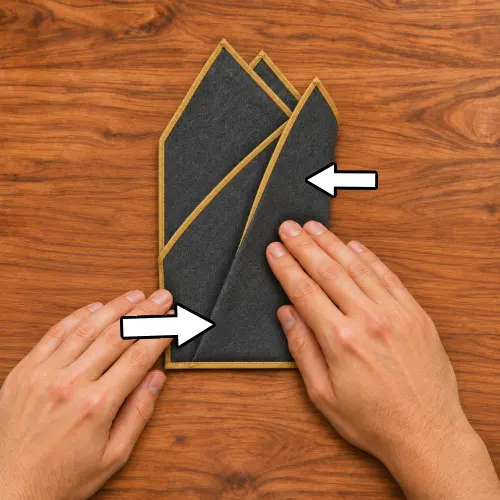
Step 5: Fold the bottom edge upward if needed to fit your breast pocket’s depth.
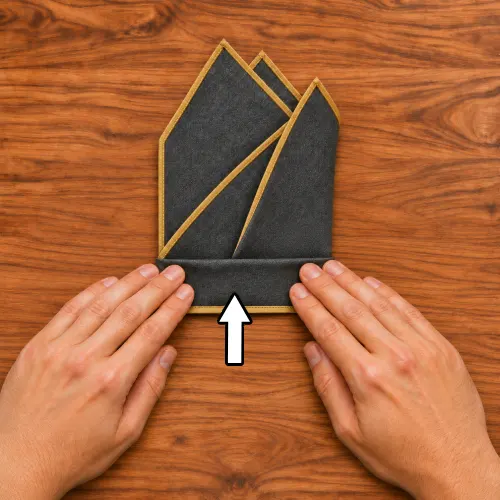
Step 6: Slide the base into the pocket and adjust the three peaks so their spacing looks deliberate.
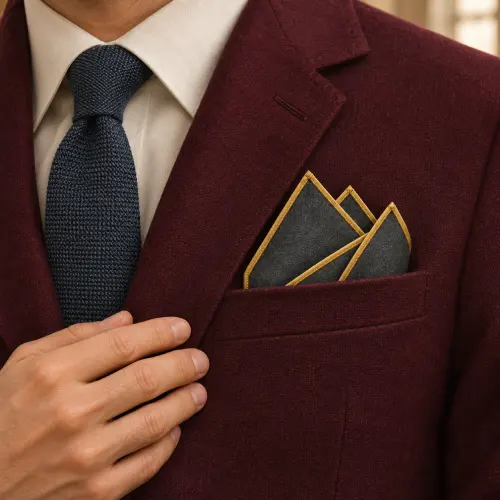
The three points don’t need to be perfectly even. Give each one a little space, and keep the overall shape balanced with your outfit.
What it should look like: Three triangular points spreading gently across the top of the pocket. They needn’t be identical, although a wildly uneven middle peak will draw the eye.
Watch for: One side springing open as you insert the fold. Hold the lower folded layers together and release them after the square is seated. I learned from experience this shouldn’t take 20 mins and a sailor’s vocabulary, but what can I say? I’m gifted.
Which Pocket Square Fold Works Best for a Suit, Wedding, or Tuxedo?
Business suits: The Presidential is the conventional, subtle option. A one-point fold also works well in many offices, particularly with a textured jacket.
Wedding guests: One-point and two-point folds strike a comfortable balance. A patterned puff can feel at home at a less formal celebration. For outdoor weddings in warmer weather, your suit fabric matters just as much. My guide to summer suits for men covers that part.
Groom or wedding party: A three-point crown can add some personality, especially in photographs. If the lapel already has a boutonniere, a simple flat fold may keep that area from looking crowded.
Tuxedos and formal eveningwear: A white linen Presidential fold is a traditional choice for black tie. More expressive folds exist, though the event’s level of formality is worth considering before choosing one.
Smart-casual blazers: The silk puff looks particularly good against softer, more relaxed tailoring. A one-point fold works when you prefer cleaner lines. If you’re still figuring out how to make a blazer work without looking dressed for a board meeting, my smart casual guide covers the rest.
How to Keep a Pocket Square in Place
The fold can be perfect on the table and a bitch after ten minutes in a jacket. Usually, it’s just a sizing problem.
- Match the pocket width. Your folded square should sit snugly enough to resist slipping, with room to slide in without force. Jacket pockets are not all identical.
- Control the visible height. Start with roughly a quarter to half an inch for a flat fold. Pointed and puff folds can show more, provided the shape remains proportionate to the lapel and pocket.
- Reduce bulk at the bottom. Fold upward to adjust depth, but avoid stacking thick layers into a tight pocket. A large, heavy square may need a simpler fold.
- Expect some movement from silk. Smooth silk can settle as you move. A quick adjustment is normal. A pocket-square holder can help if yours keeps sinking, though it adds another layer.
- Check the jacket from the side. A breast pocket that balloons outward is carrying too much fabric. Thin the fold or swap squares before trying to press it flat with your palm.
And if one point sits a fraction higher than its neighbor? Most people won’t notice; you might. You might go slowly insane if you attempt to have it stay perfect all the time.
Also, no man should go to the bathroom that many times at a function, unless something more important isn’t functioning well.
Fabric and size can make a surprising difference. Rampley & Co’s pocket square guide explains how silk, linen, cotton, and tweed behave differently when folded, including why some squares slip down inside a jacket pocket.
A tissue changes the habit
Kleenex appeared in 1924, initially marketed for removing makeup. By the early 1930s it was advertised as a disposable alternative to cloth handkerchiefs. The practical handkerchief slowly lost ground, while decorative squares continued to appear in tailored looks.
Quick Pocket Square Folding Questions
Learn the flat fold and one-point fold. Those two cover a lot of outfits and teach you how to control width and visible height.
Yes, but the result may behave differently. Soft silk tends to collapse into gentler shapes, while linen and cotton hold crisp points and straight lines more readily. For lightweight silk, try the puff first.
Fuck No! A flat fold benefits from a clean edge, while a puff looks better with some natural irregularity. The aim is a shape that looks intentional and stays comfortably in the pocket.
There are dozens of ways to fold a pocket square, and that’s before you start experimenting with different fabrics, colors, and patterns. The same fold can take on an entirely different personality depending on what you’re wearing it with. These five should give you a good starting point to experiment, get creative, and perhaps develop a mild addiction to what I lovingly refer to as decorative fabric origami.
And if you suddenly find yourself shopping for pocket squares you have absolutely no occasion to wear, well, I did warn you.