
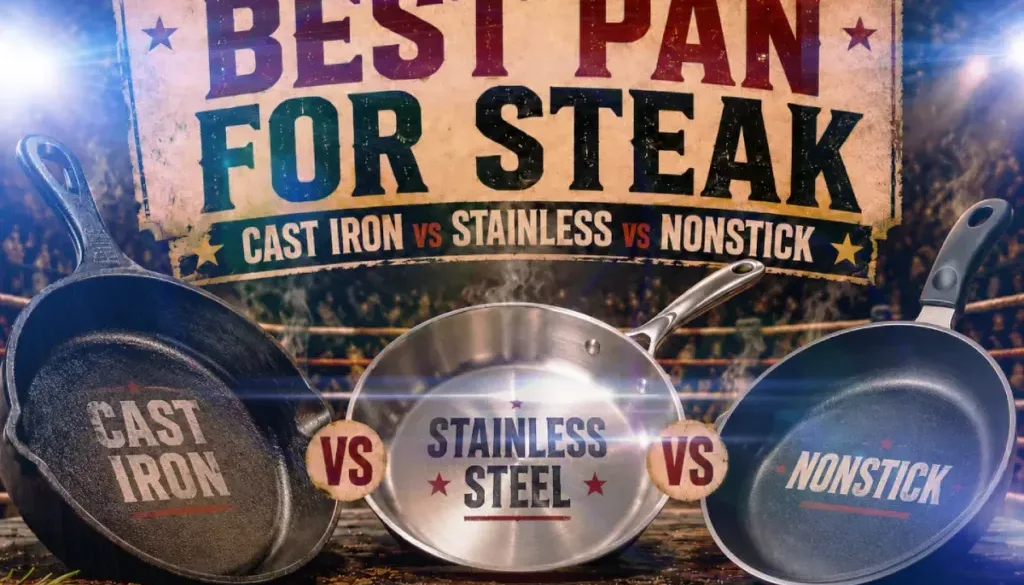
Best Pan for Steak (Cast Iron vs Stainless vs Nonstick)
Usually, people do not care about cookware science.
They care that restaurant steak shows up with that dark, angry, beautiful crust while their home steak comes out gray, damp, and emotionally disappointing.
That’s where the pan matters.
Not because you feel the need to become the kind of person who says “thermal conductivity”, or “Maillard reaction” at dinner. Please don’t. The pan matters because steak crust needs heat. Real heat. You need something that can get screaming hot and hold that heat after a cold piece of meat hits the surface.
That’s the whole fight.
Cast iron, stainless steel, nonstick, carbon steel. They can all cook steak, technically. But they do not all give you the same crust, the same smoke cloud, or the same level of “did I ruin this steak, my pan, and my date combo?” panic.
Let’s keep this practical.
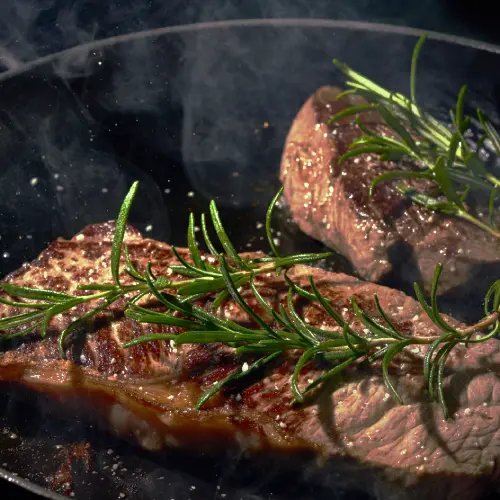
Quick Answer: What’s the Best Pan for Steak?
If you want the best steak crust possible, cast iron wins.
If you want the best long-term all-around pan, stainless steel is probably the smarter buy.
Carbon steel is excellent but slightly more niche, while nonstick works fine for beginners but struggles with deep crust.
That’s the short version.
Now let’s get into why.
| Pan Type | Crust Quality | Ease of Use | Smoke Level | Cleanup | Maintenance | Best For |
|---|---|---|---|---|---|---|
| Cast Iron | Excellent | Medium | High | Medium | Medium | Best steak crust, thick steaks, aggressive searing |
| Stainless Steel | Excellent | Medium-hard | Medium-high | Medium | Low | Best long-term all-around steak pan |
| Nonstick | Weak to decent | Easy | Lower | Easy | Low, but delicate | Beginners, thinner steaks, low-drama cooking |
| Carbon Steel | Excellent | Medium | High | Medium | Medium-high | Cast iron fans who want something lighter |
If crust is the goal, cast iron wins the bar fight.
If you want a pan you can use for steak, chicken, sauces, vegetables, and general kitchen survival, stainless steel is probably the better long-term pick.
Nonstick works, but it’s not where steak goes to become legendary. Nonstick pans are for eggs, not steaks. That’s a little dramatic, but only a little.
Why Pan Choice Changes Your Steak Crust
Steak crust happens when surface moisture gets out of the way, and heat does its job.
That’s why a wet steak turns sad in the pan. The surface has to dry before it browns. If the pan is weak, thin, or crowded, the steak starts steaming before it starts searing. That’s how you get the sad gray meat with tan patches instead of a real crust.
A good steak pan does two things really well:
It gets very damn hot.
It stays very damn hot when the steak hits it.
That second part is where cheap, thin pans get bullied, fall short, or, in one personal case, melt. You preheat them, they seem hot, you drop the steak in, and the temperature falls on its face like a drunk uncle.
That kills the sear.
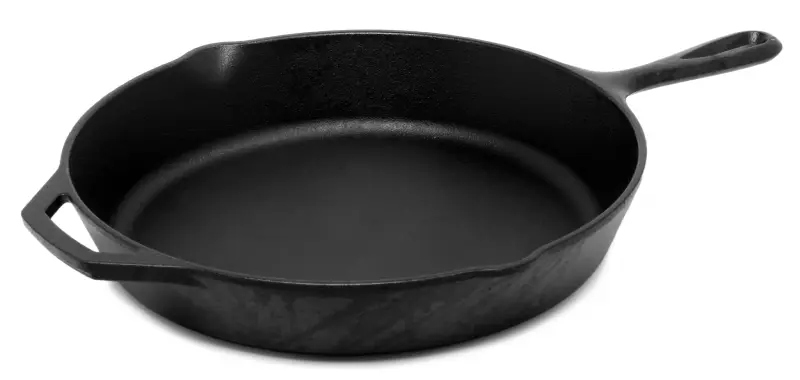
A thicker, heavier pan has more heat stored in it. Cast iron is famous for this. Stainless steel can do it too, especially if it has a thick base or clad construction. Carbon steel can get ripping hot. Nonstick? It can cook steak, but high heat is not really its happy place.
So yes, pan choice matters.
But the good thing is the steak gods do not demand a $500 skillet to be blessed by a French grandmother of a Michelin chef.
Cast Iron for Steak: Best Crust, Most Smoke
Cast iron is the obvious steak pan for a reason.
It gets hot. It stays hot. It makes a steak crust that would give Darth Vader PTSD.
That heavy surface helps when you drop in a thicker steak, especially something over an inch. The pan does not panic as easily. It keeps throwing heat into the meat, which helps build that dark seared exterior before the inside overcooks.
That’s the good news.
The bad news is your smoke alarm may develop exhaustion.
Cast iron at steak temperature gets smoky. Not “light kitchen aroma” smoky. Might be more like “Only you can prevent forest fires” smoky.
It is also heavy. That matters if you’re tossing it around, cleaning it, or trying not to damage a glass cooktop. Cast iron also needs a little maintenance. You don’t need to baby it like a museum artifact, but you do need to dry it properly and avoid letting it sit around wet like a neglected shovel.
For steak, though? Cast iron is a beast. If you need me I’ll be dead on this hill.
| Cast Iron Strength | Why It Helps Steak |
|---|---|
| Heavy heat retention | Keeps the pan hot after the steak goes in |
| Aggressive searing | Builds darker crust faster |
| Better performance with thick steaks | Gives you more crust before the inside goes too far |
| Oven-friendly build | Useful for thicker cuts after the sear |
The downside is smoke, weight, and the small learning curve of keeping it seasoned.
Still, if someone asks for the best pan for searing steak, cast iron is the answer I’d give without pretending the room needs a debate club.
Stainless Steel: Harder to Learn, Amazing Once You Get It
Stainless steel has a reputation for being fussy.
That reputation is partly earned.
If the pan is too cold, steak sticks. If the pan is too hot, oil smokes cheech and chong style. If you panic and start scraping too early, the steak tears and you swear in languages you’ve only heard on YouTube. Your cabinets cannot unhear that.
But once stainless steel clicks, it’s excellent.
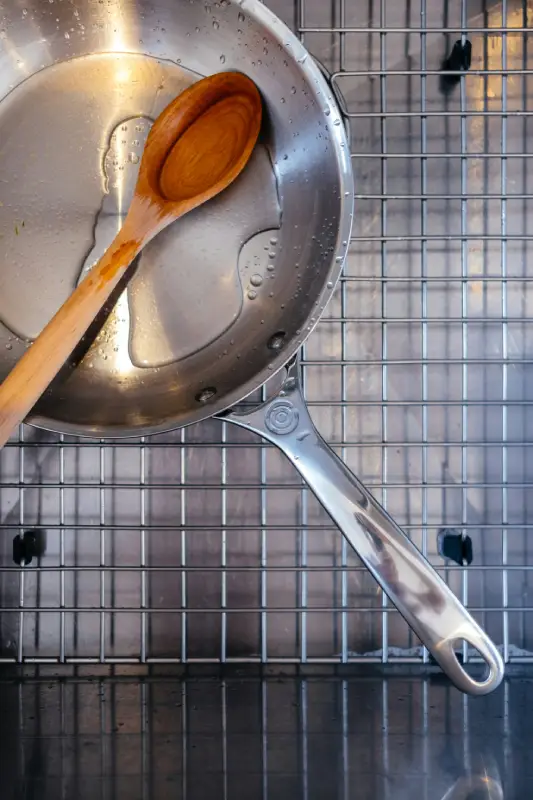
America’s Test Kitchen has a useful stainless steel preheating trick using a few drops of water.
The big trick is preheating. A properly heated stainless steel pan helps the steak release when the crust forms. At first, it may stick. That is normal. Meat grabs the pan, browns, then loosens as the sear develops. People get into trouble because they try to move it too early.
Also, stainless gives you fond.
Fond is the browned, god-like stuff left behind after searing. That’s not burnt nonsense unless you actually burned it. It’s concentrated flavor. If you ever make a pan sauce, that browned layer is where the good stuff lives.
Stainless steel gives you a strong crust and a cleaner path into sauce-making than cast iron. It is also easier to maintain. You wash it. You dry it. You don’t need a small emotional support ritual afterward.
Stainless steel is great if you want:
| Stainless Steel Strength | Why It Works |
|---|---|
| Strong searing | Can build a serious steak crust |
| Fond development | Great if you want pan sauce later |
| Lower maintenance | No seasoning layer to protect |
| Long-term versatility | Works for far more than steak |
| Cleaner daily use | Less fussy after cooking |
The learning curve is real, but it’s not self control, not witchcraft.
Preheat it properly. Add the right oil. Let the steak sit long enough to form a crust. Stop poking it like you’re checking if it’s ticklish.
Stainless steel might be the best steak pan for someone who wants one serious pan that can handle a lot more than steak night.
Follow this video for the only go to needed preheating trick!
If you want the full step-by-step process after choosing the right pan, check out my full guide on cooking steak in a pan without screwing it up. It covers heat, timing, oil, flipping, butter basting, and all the little mistakes that turn expensive steak into regret.
Can You Cook Steak in a Nonstick Pan?
Yes, of course, you can cook steak in a nonstick pan.. I mean if you have to.
There. Nobody had to clutch pearls.
If you search “cook steak non stick pan,” the honest answer is this: it works, but it has limits.
Nonstick is easier for beginners because food releases cleanly, cleanup is simple, and it does not punish every tiny mistake. If you’re nervous, cooking a thinner steak, or making dinner on a weeknight without fogging the kitchen into Silent Hill., nonstick can get the job done.
But it will usually give you a much weaker crust.
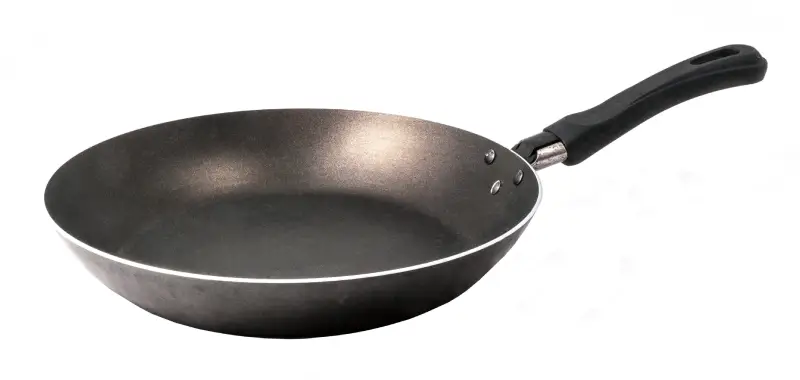
Most nonstick pans are not designed for the kind of ripping high heat that steak crust loves. Many nonstick coatings can degrade faster under high heat, and some manufacturers specifically warn against overheating them. That means you’re cooking with a ceiling over your head.
A nonstick pan can brown steak.
It usually will not give you that deep, restaurant-style crust.
Use nonstick for steak when:
| Nonstick Makes Sense | Why |
|---|---|
| You’re new to cooking steak | It’s forgiving |
| You’re cooking thinner cuts | Less time needed for browning |
| You want easy cleanup | Nonstick wins there |
| You don’t care about maximum crust | Perfectly reasonable on a Tuesday |
Skip nonstick when you want the best steak crust possible.
It’s not elitist. It’s just physics.
What About Carbon Steel?
Carbon steel is like cast iron’s leaner cousin who does pull-ups and owns one good knife.
It can get very hot. It can sear beautifully. It is usually lighter than cast iron and responds faster to heat changes. That makes it popular with people who enjoy cookware enough to have opinions about pan seasoning and burner control.
For steak, carbon steel can be excellent.
The catch is that it still needs seasoning, care, and a little confidence. It is not hard, but it is less beginner-friendly than stainless and less familiar to most home cooks than cast iron.
If you already like cast iron but wish it were lighter as you have no intentions of using it for blunt force trauma, carbon steel is worth a look.
If you are buying your first steak pan and want the least weird path, start with cast iron or stainless.
Mistakes That Ruin Steak No Matter What Pan You Use
A good pan helps, but it cannot save every bad decision.
Some steak mistakes are pan-independent crimes.
Overcrowding the Pan
Don’t pack that pan like it’s carrying passengers during a subway delay.
Too many in there and they’ll steam each other instead of searing.
Each steak needs space. If you’re cooking for multiple people, cook in batches. Yes, it takes longer. So does apologizing for gray steak.
Cooking a Wet Steak
Moisture is the enemy of crust.
Pat the steak dry before it hits the pan. Not casually. Actually dry it. Paper towels are cheaper than regret.
A wet surface has to steam off before browning can happen, and by then you may already be losing the crust battle.
Weak Heat
If the pan is not hot enough, the steak does not sear properly.
You want that immediate loud sizzle when it hits the surface. Not a shy little whisper. A real sizzle. The kind that makes you stand a bit straighter.
Weak heat gives you dull browning, gray edges, and a steak that died for very little..
Wrong Oil
Butter is great later.
Butter at the beginning, over high heat, can burn fast and make everything taste like you got distracted scrolling.
Use a high smoke point oil for searing. Avocado, canola, peanut, something in that neighborhood. Save the butter for the finish if you’re going that route.
Moving the Steak Too Early
“Leave it alone.” He said through clenched teeth.
This is hard because steak makes noise and people get nervous. But crust needs uninterrupted contact with the pan. If you keep lifting, flipping, fondling, and checking, you’re interrupting the one thing you claim to want. Good things come to those who stop checking their steak.
Shhhh… Let the crust form.
The steak will survive without your constant supervision. Don’t helicopter parent.
The pan matters, but it still can’t save bad steak technique. If you want the full walkthrough for getting an actual steakhouse-style crust at home, go read the full pan-seared steak guide next. That’s where we get into heat, timing, flipping, butter, and avoiding gray sad-steak energy.
So What’s Actually the Best Pan?
Cast iron is the best pan for steak crust.
That’s the stance.
If your main goal is a deep, dark, serious steak browning, cast iron is the pan I’d grab first. It holds heat, sears hard, and handles thick steaks well. It is smoky, heavy, and slightly annoying, but it gets the job done.
Stainless steel is the best all-around long-term pan.
It can sear steak beautifully, gives you fond for pan sauces, and does not need cast iron maintenance. It takes more learning up front, but once you get comfortable with it, stainless steel becomes one of those kitchen tools that quietly earns its rent.
Nonstick is acceptable for beginners or if you’re just interested in the eating part.
You can cook steak in a nonstick pan. You can even make a decent steak. But if you’re chasing Texas Roadhouse style searing, nonstick is the wrong horse. Friendly horse. Wrong horse.
Carbon steel is great if you’re already into cookware.
It can perform like a lighter, faster cast iron pan, but it asks for some care and seasoning. Nice tool. Not mandatory.
So my actual ranking:
| Rank | Pan | Verdict |
|---|---|---|
| 1 | Cast Iron | Best crust |
| 2 | Stainless Steel | Best long-term all-around pan |
| 3 | Carbon Steel | Great, but more niche |
| 4 | Nonstick | Fine for beginners, weak for crust |
For most normal people, I’d say this:
Buy a cast iron skillet if steak crust and possible family-heirloom energy are your priorities.
Buy stainless steel if you want a serious pan for steak and everything else with easy maintenance.
Use nonstick if that’s what you have, but don’t expect Gordon Ramsey results from a pan designed to baby scrambled eggs.
Final Thoughts
People obsess over steak every step of the way, from cuts to pans, way too much.
You do not need a gas powered shrine, a chef coat, or a $400 skillet with a backstory. You need a pan that gets hot, holds heat, and lets the steak build a real crust before you start bothering it.
Cast iron gives you the best crust. Stainless steel gives you the best long-term all-around pan. Nonstick gets dinner made, but it is not winning any Iron Chef challenge.
And if you cook a steak well done
..in a nonstick pan .. with no crust at all?
I’m not angry.
I’m only very, very disappointed.